This Wikimedia Commons page is used for general discussions relating to copyright and license issues, and for discussions relating to specific files' copyright issues. Discussions relating to specific copyright policies should take place on the talk page of the policy, but may be advertised here. Recent sections with no replies for 7 days and sections tagged with {{section resolved|1=~~~~}} may be archived; for old discussions, see the archives.
One of Wikimedia Commons' basic principles is: "Only free content is allowed." Please do not ask why unfree material is not allowed at Wikimedia Commons or suggest that allowing it would be a good thing.
Any answers you receive here are not legal advice and the responder cannot be held liable for them. If you have legal questions, we can try to help but our answers cannot replace those of a qualified professional (i.e. a lawyer).
Your question will be answered here; please check back regularly. Please do not leave your email address or other contact information, as this page is widely visible across the Internet and you are liable to receive spam.
Please do not make deletion requests here – instead, use the relevant process for it.
Latest comment: 3 days ago27 comments10 people in discussion
I suspect this is a digital archive for someone, like they're using it as storage rather than other storage providers;
https://commons.wikimedia.org/wiki/User:Atlasowa/New_video2commons/2025_June_1-10
This is the page i initially found, i was attempting to find all instances of a song and came across this, with multiple full episodes of The Amazing World Of Gumball just here.
Is this sort of thing allowed? It seems like its violating alll sorts of copyright law, but then again i see lots of videos with varying use/significance HyperNover (talk) 02:48, 30 November 2025 (UTC)Reply
With the latest information obtained by 19h00s, it is quite clear that we can't keep these videos and derivative works. So I deleted all files and closed the DR. Thanks to all for the investigation. Yann (talk) 19:05, 12 December 2025 (UTC)Reply
All 4000+ videos posted on Cartoon Network India's YouTube channel are marked Creative Commons Attribution. These include videos of numerous cartoon franchises owned by numerous different companies (Looney Tunes, Tom & Jerry, Ben 10, The Amazing World of Gumball, Teen Titans Go, Lamput, Kiteretsu, Grizzy & the Lemmings, Batwheels, etc.). There is no way in hell that Cartoon Network India somehow overthrew capitalism and convinced some of the most litigious media companies on the planet (Warner Brothers, DC Comics) to relinquish control of their intellectual property and give away their cartoons for free in perpetuity. Please put on your thinking caps and ask if this actually makes sense. Clearly someone somewhere has made a mistake. If you think that's unlikely, notice that they also consistently misspelled the title of Grizzy & the Lemmings. Clearly this YouTube channel has low quality control and no one has noticed the incorrect license setting. We need to do two things, neither of which I know how to do:
Totally agree with you. To me, this is ridiculous on its face. This does not appear to be a purposeful choice by the actual rightsholder, but rather a designation made by an overzealous or misinformed staffer at a foreign subsidiary, which may or may not have the legal authority to license these videos as such - and that's not a legal authority I believe we should be comfortable "assuming" they had. We need some kind of proof that this was purposeful and authorized by the rightsholder, unlike with individuals, where it's generally safe to assume that any person has the legal authority to release their own work. However, it does appear that all the shows Cartoon Network India has uploaded are in fact owned by Cartoon Network or their parent company, Warner Bros Discovery, some via other subsidiaries (for example: Grizzy & the Lemmings was produced in part by the French TV channel Boomerang, which is owned by WBD; Batwheels is property of DC Comics, which is owned by WBD; and the rights to Tom & Jerry were purchased from Hanna-Barbera by Turner Broadcasting in 1986, which merged with TimeWarner in 1996 and eventually became WBD). 19h00s (talk) 18:30, 30 November 2025 (UTC)Reply
@JWilz12345: Did you hear anything back? A faster approach might be to repost one of the videos on YouTube and see how long it takes to get it taken down with a copyright strike. My guess is less than a day. Nosferattus (talk) 06:42, 3 December 2025 (UTC)Reply
I'm not sure we're gonna hear back from WBD anytime soon given the news (the company is splitting its Discovery properties into a new entity and selling its Warner Bros/HBO properties to Netflix, pending regulatory approval). I imagine there's about to be a lot of work for the licensing team as they split up their content and possibly assign new IP ownership. 19h00s (talk) 16:34, 5 December 2025 (UTC)Reply
Can you think of any plausible scenario in which a staffer would mark all their videos as CC BY SA without intending to do exactly that? Trade (talk) 01:43, 8 December 2025 (UTC)Reply
Comment It is indeed surprising that these videos are under a free license. They should be contacted to make sure the license is valid, on YT or on https://www.facebook.com/CartoonNetwork.India/. Another possibility is to write to copyright@youtube.com (I did that). But if we don't get any answer, I don't see any reason to delete these files from Commons. There is no doubt that this is an official channel, so we do not have to make a double standard with free licenses. Yann (talk) 15:31, 4 December 2025 (UTC)Reply
Hi, I got an answer from YouTube which basically says: If you are the copyright holder, then send a takedown notice (with the form). It is clear that YouTube doesn't care. Yann (talk) 17:19, 5 December 2025 (UTC)Reply
Perhaps we should take the same attitude here, though unlike them I think we would do well to add a warning template about questioning the authority of Cartoon Network India to release these. Or we could just delete. But nothing else between seems to make much sense to me. - Jmabel ! talk20:32, 5 December 2025 (UTC)Reply
If it's under CC law and Warner India released it under then it should be creative commons, so i think we should keep the files.
Also similar situation with NickRewind releasing character depictions and videos under CC, people might take advantage of this for fanworks or some weird stuff.
DR the category. Unlikely that CNI has the authority to freely license the works. The guy uploading files to YouTube would not have relicensing in his scope of employment. Glrx (talk) 04:04, 8 December 2025 (UTC)Reply
Latest comment: 4 days ago14 comments8 people in discussion
We encounter this from time to time, has there been a definitive consensus? Does the low-res image in the public domain force the hi-res version into the public domain? We see this with advertisements in Billboard magazine for album covers. We have the low-res advertisement, the higher-res album cover, and the highest-res scan of the negative or first generation print. RAN (talk) 01:16, 4 December 2025 (UTC)Reply
I think if the color is the natural color it would not be a new creative work. The USCO has awarded a new copyright for some colorized movies because the colors were chosen by the color artist performing the colorization. This may not be the case if the movie was restored to the natural colors based on color film stills, or if the costumes are still extant. --RAN (talk) 23:11, 4 December 2025 (UTC)Reply
I'm not claiming any expertise here, but most of the on-Commons precedent I've seen for this is about how this works 'for CC licenses, where we have pretty consistently said that those work this way, because you are providing a license for your copyright, which would be the same copyright as for a higher-resolution version. I believe there have been at least a few cases where we have respected that a licensor is explicit about licensing only a low-resolution version, and do not consider this to also license a higher-resolution version, though I can't readily point and an example.
I believe the situation may be different for material falling into the public domain. If, for example, a low-resolution, half-toned version of a photo was published in the U.S. without notice back in the era when notice was required, I am not at all sure that would place the underlying high-resolution photo into the public domain. Further, I'm almost certain that if a low-resolution reproduction of a copyrighted painting fell into the public domain that way, it would not destroy the copyright of the painting in general. These last two cases seem the most analogous to an album jacket.
"Further, I'm almost certain that if a low-resolution reproduction of a copyrighted painting fell into the public domain that way, it would not destroy the copyright of the painting in general." if a painting was first published (with the clear consent of the author) as a low-quality scan in an art display magazine or something, and they never bothered to include the notice, I would say that yes, that would make the copyright defective. In practice I don't think that even could be the case because a painting would have been displayed which would count as the original publication, but applying this to paintings is somewhat different than photographs or art meant to be on printed matter from the get go (e.g. album covers), just in how copyright for them was considered.
I would be very surprised if we had ever granted that a difference in resolution can have a difference in copyright, especially if it is to do with licensing because AFAIK CC explicitly says you cannot have license apply to only some resolutions. I would argue the underlying photo falls out of copyright regardless of quality of its first iteration. Even lower quality prints are the same creative work that had the intellectual/creative decisions of the author, and technical quality born of printing processes is not a creative distinction, as much as a copy with a scanline due to printing processes is intellectually different. First publication is first publication. If not, how far does this go? Can a 1200x800 photo be copyrighted while a 1140 x 760 photo is free, when the images are otherwise visually identical, even if the difference was solely born out of technical restriction? If a photo was published in a magazine in poor quality in 1915 but a higher quality negative is discovered in 2025, is any higher quality negative version of this otherwise identical, public domain photo, now a copyright violation because it was "unpublished"? Following this train of logic many high quality old photos pre-1929 are violations, as they they were first 'published' (made available to the public) in poor quality due to the constraints of the time. Is any new higher quality version of any work discovered now a copyright violation?
It would be useful to find American copyright precedent that deals solely with differences in the technical visual quality of the work. There are cases where added color has been copyrighted, but that is a later creative addition as a derivative of the work, not the reverse, so isn't very helpful. PARAKANYAA (talk) 05:40, 6 December 2025 (UTC)Reply
if a painting was first published… as a low-quality scan in an art display magazine or something: quite probably, but, as you note, almost never the relevant case, so I'm not sure why you even bring it up.
AFAIK CC explicitly says…: yes, as DMacks notes below, but completely irrelevant to questions of U.S. law about mandatory copyright notices worked in a past copyright regime. This is not about how CC licenses work.
Can a 1200x800 photo be copyrighted while a 1140 x 760 photo is free: almost certainly not, but also not the sort of case we are presumably talking about.
But while we are on reductio ad absurdum, consider one in the other direction: painting, record cover, whatever, appears on a wall in the background of a snapshot taken by the artist, so obviously take with their permission. At some point they send the snapshot to half a dozen friends, and of course they don't think to put a copyright notice on that. Clearly the snapshot was immediately PD under the laws of the time, but I really doubt that any copyright of the work of art in the background would have been affected.
Other than your last paragraph, I'm finding it hard to get to the meat of what you are saying because of these edge-case digressions. Jmabel ! talk06:41, 6 December 2025 (UTC)Reply
You said that if "a low-resolution reproduction of a copyrighted painting fell into the public domain that way, it would not destroy the copyright of the painting in general". Given the word "resolution" I figured photographic reproduction, and I think yes it would.
A private display of a work to friends would not be publication, so that wouldn't be relevant. For a work to be published it must be distributed [2] "to the public by sale or other transfer of ownership, or by rental, lease, or lending". If it is an incidental background piece included by accident, that would not be intentionally published with the copyright holder's consent, and also would not count. But advertisements and such are not accidental. Copyright is a mess of edge case digressions. PARAKANYAA (talk) 06:45, 6 December 2025 (UTC)Reply
Huh. So all CC licenses amount to licensing at all resolutions. (I wish they had made that overt in the language of the license itself, but so it goes.)
@Nard the Bard: It doesn't prevent us, but it also doesn't allow us. It would let us upload an equivalent crop from the better print, but it can't grant a license for what it doesn't show. - Jmabel ! talk04:11, 9 December 2025 (UTC)Reply
I don't think there is a court case precedent on this, so it's all speculation. The main question, really, is if there is copyrightable expression present in a high-resolution version which is not present in the low-resolution one. If that is the case, the author can license only the latter, and not license the former. For a painter licensing an image of their painting, I think that would absolutely be the case -- you can see more of the painting's expression at a high resolution. For a non-derivative photograph, the question is harder -- if the copyrightable expression is in the framing, angle, timing, lighting, and elements like that -- then it's entirely possible the low-resolution version already has all of those elements, and thus all of the expression was licensed in the low-resolution version. Questions like these could well vary between countries -- it comes down to precisely how each country defines a "work". Given the uncertainty, I think we respect that type of license, and do not assume that we can use a higher-resolution version. At the same time, for someone wanting to license that way, they should be aware that it's possible they may not be able to prevent it. It should not be possible to try and place restrictions outside of copyright on a work here, so authors need to risk that aspect if they want to license a low-resolution work here that way. I don't think anyone has brought up a court case which tackled this question. The CC FAQ does say: Accordingly, in some jurisdictions releasing a photograph under a CC license will give the public permission to reuse the photograph in a different resolution. We just don't know which jurisdictions, and that also implies in some other jurisdictions it would be different. So, the only thing we can say for sure is that the expression in the low-resolution version has been licensed, and if someone wants to take the risk on a high-resolution version that is up to them, but we probably shouldn't assume it. Carl Lindberg (talk) 13:34, 11 December 2025 (UTC)Reply
The work wouldn't be "forced" into PD. The work either would or wouldn't be, and the reproductions would follow. I guess it could be possible to make an image that actually showed different things at different resolutions (?), like one of those 3D sculptures that are different as viewed from the side or the front. That would be an interesting hypothetical and I imagine I'd argue that the low-res work is inherent in the hi-res but not visa versa. But anyway, that's just a hypothetical. GMGtalk13:47, 11 December 2025 (UTC)Reply
Does anyone know the copyright status of the video showing the Colosio murder?
@Vaquita marina: . Please take a look at COM:YOUTUBE for more details, but there are two things you're going to need to check. The first one is whether the copyright holder of the video (whoever took it) and whoever controls the YouTube channel are the same. If they're not, then you're going to need to figure out who took the original video so that it's copyright status can be checked. If they're the same, then the next thing you're going to need to check to see is what kind of license the video has been release under. If it's release under a Creative Commons YouTube license, then it's OK for Commons; if it's released under a standard YouTube license, then it's not OK for Commons because that license is too restrictive. I don't have a registered YouTube account so I can't check how the video is licensed.Please understand that all of what I posted so far is just related to whether you can upload the video (or a COM:SCREENSHOT from the video) to Commons. Whether you can use the video or a screenshot it the Spanish Wikipedia article you linked to above depends what Spanish WIkipedia's policies/guidelines regarding image use are. Commons is primarily concerned with the copyright status of the content it hosts; the encyclopedic use of the files uploaded to Commons is left up to each of the different Wikipedias to determine. -- Marchjuly (talk) 10:26, 5 December 2025 (UTC)Reply
I don't know who recorded the video, that's the problem, the only thing i know it's that the video was published by the FGR. ಠಠ00:32, 6 December 2025 (UTC)Reply
Virtually everything created in the contemporary world that is imaginably copyrightable is copyrighted. Unless you have some specific reason to think this would not be, it's pointless to request a wild goose chase in hopes of finding some grounds where it would be in the public domain. - Jmabel ! talk19:53, 6 December 2025 (UTC)Reply
On this link: [6], the article mentions that "La PGR había clasificado el video solicitado por un ciudadano, al argumentar que hacer público su contenido representaba un riesgo.
Esta persona interpuso un recurso de revisión ante el Inai, pues “el material ha sido objeto de una resolución en materia de acceso a la información”, según el comunicado, solicitud que procedió a favor del ciudadano.", but Also, there is a video on the bottom of the article that was deleted by copyright, which it's strange, considering the thousands of videos uploaded to the web without receiving any copyright claims.
Decir que el gobierno no está autorizado a ocultar la información en el video no es lo mismo como decir que el gobierno falta derechos del autor ("copyright"). Ser en el dominio público no solamente significa que el público puede ver/leer/oír. Significa que es "libre de toda exclusividad en su acceso y utilización'.
Y, por favor, discúlpame si mi español tiene problemas similares a tu inglés. Parece que a ambos nos va bastante bien con ambos. - Jmabel ! talk20:27, 7 December 2025 (UTC)Reply
@Vaquita marina: You, as uploader, would be required to provide evidence that it is either free-licensed or in the public domain. You have provided none, and I cannot find any such evidence myself, so as far as I can see you cannot upload it here.
See Commons:Copyright rules by territory/Mexico#Government works. It is not clear there whether the 1996 extension of copyright of Mexican government works from 50 years to 100 years was retroactive (I suspect it was, for any works still in copyright in 1996, but I don't know) but either way, this dates from 1994, so it at least has the 50 years protection granted by the law at that time, which would last through 2044. Unless the Mexican government were to issue a license (unlikely), Commons cannot host his video. - Jmabel ! talk22:46, 8 December 2025 (UTC)Reply
I'm talking not only about public domain, i'm talkig about all licenses, But anyway, thanks for the article. ಠಠ00:02, 9 December 2025 (UTC)Reply
I repeat, this article [7] says that: the video was published at the request of a citizen.
The INAI requested to the PGR to publish the video:
@Vaquita marina: Again, and this is the last time I will repeat myself: you cannot publish this on Commons unless you can get the Mexican government, as copyright-holder, to issue a free license, and that is very unlikely. No one but the copyright-holder can issue a license. - Jmabel ! talk04:15, 9 December 2025 (UTC)Reply
Latest comment: 12 hours ago16 comments7 people in discussion
Do we need to blur the blue mosaic tiles here? Do they present a copyright issue? (United States).
I'd appreciate just an answer rather than someone going and doing this, because I'd like to make my own aesthetic choice about how to blur. Jmabel ! talk21:33, 5 December 2025 (UTC)Reply
I was reading the US Copyright Office documents about copyrightablity last night, and ... I don't know. I guess the answer is yes, the irregular blue mosaic tiles were laid down in a pattern by the maker and that would be enough to be copyrightable.--Prosfilaes (talk) 22:07, 5 December 2025 (UTC)Reply
My gut instinct was that there's no copyright issue (plain, monochromatic decorative mosaic/glass tiles embedded in concrete [?], compositionally just an arrangement of PD geometric shapes). But then my mind jumps to historical visual artists from the Washington Color School or color field more generally, including Kenneth Noland, Alma Thomas, Ellsworth Kelly, and Morris Louis; their estates' claims on copyright for historical works compositionally similar to (or sometimes even simpler than) this mosaic have never been tested in court, at least not on threshold of originality grounds, as far as I know. (not that those artists' works are in any way some kind of legal precedent, but they raise interesting questions about ToO that parallel well with this mosaic imo) --19h00s (talk) 22:28, 5 December 2025 (UTC)Reply
I don't see a ToO issue here, as they seem to be in a random pattern, but it does raise the question of if this counts as "Work for hire" if it was more complex. All the Best -- ChuckTalk00:31, 6 December 2025 (UTC)Reply
Contractors don't normally have copyright agreements in their contract, so if it was above TOO, weather or not it's a work for hire would matter. (doesn't matter here beacuse it's below TOO) All the Best -- ChuckTalk20:29, 6 December 2025 (UTC)Reply
@Alachuckthebuck: Since the photographer has no connection to anyone with even imaginable intellectual property rights to the mosaic, I still don't see how "work for hire" would enter the picture. You seem to be dealing with a doubly hypothetical case. - Jmabel ! talk20:30, 7 December 2025 (UTC)Reply
I highly doubt the pattern is copyrighted, because I think it is extremely unlikely that the person laying the tiles had the necessary intention to create an original work. It is far more likely that the tiles were placed essentially haphazardly according to the requirements of construction. The laying of tiles does not imply "some creative spark" (to use the turn of phrase from Feist). In all probability, the person who created this object put no particular thought into this pattern, and so there was no "spark." The contractors may have also walked across some floor that day and left a track of footprints, but, irrespective of the complexity of that pattern of footprints, this does not make a photograph of the room with dirt tracked on the floor subject to the contractor's copyright, because those patterns are not the product of "some creative spark."
In general, there are two ways that a work can fail the "creative spark" test.
The first, and most ironclad, is that it can be so simple that it is impossible for creative expression to be found in it. For instance, a triangle by itself is a simple geometrical shape; no matter what mental state the person drawing a triangle had, if the triangle is the only thing drawn, there is no potential for the shape itself to reflect a "creative spark."
The second way, which I think is being overlooked here, is for the pattern to have sufficient complexity as not to fall in the aforementioned category, but, due to the circumstances, not happen to reflect an active creative spark. For instance, a painting by an elephant may be very detailed, but creativity under the law means only human creativity, and so any process other than a human creative process cannot result in a copyright. Likewise, if the rain happens to erode a rock in a certain way that seems interesting to our eye, this pattern is still not a reflection of any creative spark, and so cannot be copyrighted. I would say that the incidental and unintentional byproducts of non-creative human-involved processes still fall outside of the category of "creative spark." It can be difficult to deal with this when some people may claim to have exercised creativity in even very simple items, but I don't think that most contractors performing these kinds of tasks approach them with the mindset of modern minimalist or abstract artists, and there is no reason to presume this without evidence of such intentionality. D. Benjamin Miller (talk) 20:14, 13 December 2025 (UTC)Reply
Could somebody knowledgeable provide some more context, please? I currently can't form a (more or less) informed opinion...
What do we actually see here? The description "This brick was found on the Troll Knoll to the right of the troll and is an original Denny Renton brick." uses several catchwords, but apparently you have to be in the know to understand them. Troll Knoll? Original Denny Renton brick? What does that mean?
What are the sizes of the things here? Is the mosaic perhaps part of something made for human occupancy (this could alleviate any issues: COM:FOP US for buildings, as long as this mosaic is deemed to not be pictorial)?
@Grand-Duc "Denny Renton brick" is presumably a reference to Denny-Renton Clay and Coal Company (Q27942182), a company that produced bricks on an industrial scale. The brick itself presumably holds no copyright as it is a utilitarian object produced in the thousands/millions. "Troll Knoll" is presumably Troll's Knoll park, Seattle. Based on the park's website, the "Troll" in the file description appears to be a local sculpture in seattle described at Fremont Troll (Q1354391). I have no sepcific knowledge on this subject as I found these links through internet searches of relevant key words. From Hill To Shore (talk) 21:41, 13 December 2025 (UTC)Reply
The Fremont Troll is probably the most famous public sculpture in Seattle, though of course there are other contenders (Calder's Eagle? The pig sculpture at the entrance to Pike Place Market?). Troll's Knoll Park is adjacent. I'll add more info & categories to the file page. - Jmabel ! talk00:05, 14 December 2025 (UTC)Reply
The US copyright office does not like looking at intent. I know I'm being conservative here, but when a human puts down a pattern like this, something that is not trivial and not clearly random/natural, I tend to assume they made choices to make it aesthetic, and it is thus copyrightable. I'd point out that the Copyright Office put out a book for kids telling them to draw their favorite animal! Hey, look, now you own a copyright and could register it! Drawing lines between artists and construction workers seems to go against that idea.--Prosfilaes (talk) 07:54, 14 December 2025 (UTC)Reply
I think you are making a huge mistake by searching for copyrighted works where there are none. By doing so, I feel you are severely misunderstanding the nature and purpose of copyright.
Copyright law was designed to protect certain classes of creative activity. It does not apply to all human activity that might involve order (or even all human activity that involves aesthetic preference — font design, for instance is not copyrightable).
Beyond the list of types of work that are given in the Copyright Act, we can also examine what types of item have been historically copyrighted (i.e., made available with notices, especially in the era of formalities) and/or made the subject of copyright litigation.
You will not find any examples where a smattering of tiles like this has a copyright notice attached, or where litigation has taken place regarding such smatterings, because, as common as they are, society has never thought of them as copyrightable works. Accordingly, there is no reason to think that the intention of the Copyright Act was to apply to the activity of preparing a surface with this common kind of tiling.
Commons is a rare place where we go above and beyond to find copyrights, even if it would be a reasonable assumption that they wouldn't be enforced (and I think this is a good thing). But this doesn't mean every object is copyrighted and that a billion copyrights permeate everything. There is no Sword of Damocles hanging above your head where a construction worker could sue you for infringement for taking a photo of a smattering of tiles. The contribution of the construction worker, if taken to exist at all, is clearly trivial, and the law does not concern itself with such things. If it did, we would have an unsustainable system.
I don't know why you being up the example of the activity booklet explaining copyright to kids. A drawing is one of the classic kinds of artistic expression. A kid is a kid, but art by a kid is still a copyrightable work. I certainly am not here to suggest that a person can't make a copyrightable work due to being a construction worker. I am going to at the very least suggest that the execution of a construction project is not a classic example of copyrightable activity. D. Benjamin Miller (talk) 12:03, 15 December 2025 (UTC)Reply
@From Hill To Shore: The photographer is the person who uploaded it. Originally I think their organization (the volunteer group landscaping the Knoll) had posted it on Facebook. I got hold of them, there was a good bit of correspondence back and forth, I explained that it was legally simpler if the photographer uploaded it instead of me or a random member of their group. Do you really need them to go through VRT, or will you take my word (I'll forward correspondence if you like). - Jmabel ! talk00:23, 15 December 2025 (UTC)Reply
@Jmabel If I'd known you were in contact with the photographer, I'd have given you a bit more time to get your arguments in order. I won't object to you restoring the file but, as you are against policy at the moment, any other editor may legitimately request speedy deletion now or in the future. To protect against future deletion, I'd recommend one of the following. 1. Use of VRT. 2. A formal undeletion discussion to preserve details of your case and obtain consensus to keep the file, which can be referenced by an admin if another speedy deletion request is received. 3. A formal deletion discussion for the same purpose as point 2. Whether you take any of these approaches is up to you; you could instead leave it to chance that the file survives a future speedy deletion request. From Hill To Shore (talk) 15:12, 15 December 2025 (UTC)Reply
Unlicensed derivative works of images under a sharealike license
Latest comment: 6 days ago5 comments4 people in discussion
What is the appropriate way of dealing with unlicensed derivative works of images under a sharealike license? Are they automatically assumed to be under the same license? What about wrongly licensed images? Does the original sharealike license make the new one invalid?
Example 1: Unlicensed derivative work of a sharealike licensed character design (Wikipe-tan)
Example 2: Derivative work of a sharealike licensed character design (Wikipe-tan) licensed under CC BY-NC, despite the original being CC BY-SA
My question was if the images are eligible for Commons. Not going to upload the examples regardless due to project scope, but would still like to know the licensing resolution. Dabmasterars [EN/RU] (talk/uploads) 22:22, 6 December 2025 (UTC)Reply
First example: An unlicensed derivative work is just that: their use of the underlying work is unlicensed. Since they didn't use its "SA" license, "SA" doesn't apply.
The creator of the original work can sue the creator of the derivative work for copyright violation, but it doesn't make the derivative work somehow automatically licensed.
Second example is a little more complicated, but again it just looks like a copyvio to me. (I don't see the NC license you are referring to, but I'll take you at your word. I don't see any way you can "force" the creator of the derivative work to issue a license, and I don't see any way you can claim a license for their contribution to the work exists when they haven't overtly granted it. If they overtly said somwhere that they were using the CC-BY-SA license (again, I don't see that), then they violated the terms of the license by failing to license in the same manner.
Third example: Clearly not overt about the licensed elements here, those elements cannot be licensed compatibly with the license offered so pretty much like the second, minus any fogginess. @Ruslik0: This one is a Commons matter and unless the licensing situation is remedied retroactively, this should be deleted. But I'm headed out the door right now, so I leave it to someone else to follow up. - Jmabel ! talk20:45, 7 December 2025 (UTC)Reply
Latest comment: 4 days ago12 comments8 people in discussion
In 2019, I uploaded a scan of a cover of a 1955 issue of The Illustrated London News. After discussion, it was determined that while the images on the cover were out of copyright, several paragraphs of text may not be. The solution was thus to pixelate the text (which Geraki did excellently) but otherwise retain the image. At the time, Clindberg stated that "If anonymous, the copyright to that text will expire in 2026 (70 years after publication)"—in other words, three and a half weeks from now. I'm posting here to confirm that this is in fact the case. Assuming so, we should be able to restore the original version once the ball drops. Also pinging Ankry, Jameslwoodward, and Elcobbola, who participated in the 2019 discussion. Thanks, --Usernameunique (talk) 21:17, 7 December 2025 (UTC)Reply
The text might enter the public domain in the UK in 2026. But I'd expect it would still be protected in the US until the end of 2050 (COM:URAA), and for Wikimedia Commons, media must be free both in their source country and in the US (Commons:Licensing). --Rosenzweigτ21:25, 7 December 2025 (UTC)Reply
Yeah, that was just the UK side in that discussion. The US copyright of the text would expire in 2051, unless it can somehow be shown to have been simultaneously (within 30 days) also published in the U.S. Carl Lindberg (talk) 04:28, 8 December 2025 (UTC)Reply
The byline of the magazine contains a defective United States copyright notice. This shows intent to publish in the US. And I'm willing to bet a search will reveal no registration/renewal. Meaning it's public domain RIGHT NOW in the United States. As a work simultaneously published in the US, not only does URAA not apply, arguably Commons can ignore the British copyright as well. -Nard (Hablemonos) (Let's talk) 23:02, 8 December 2025 (UTC)Reply
@Nard the Bard: I'd love that to hold up, but I'm not sure it shows intent to publish in the US (italics mine), just intent to preserve U.S. copyright. Having failed to do that through a defective notice, I think unless we can show they published in the U.S. w are still where we were. - Jmabel ! talk04:29, 9 December 2025 (UTC)Reply
I don't see why a defective US copyright notice would matter; at the time, the US demanded copyright notices for works published anywhere, so any publisher might have been inclined to include one.--Prosfilaes (talk) 04:41, 9 December 2025 (UTC)Reply
It appears that the London Illustrated News was published in New York as well as in London. These ebay listings show the same 18 November 1948 edition published in London (vol 213, issue 5717A) and New York (vol 213, issue 3212A). The location of publication, volume reference, issue reference and date all appear in the footer of the first image in the listings (the red page). US publication was by the "International News Company, New York." This isn't evidence that they continued simultaneous publication into 1955 but they were certainly doing so 7 years prior. The different issue numbers may be useful - could the US version's issue numbers appear in a record of copyrights registered in 1955 (though I am not sure which number it would be at the time)? From Hill To Shore (talk) 09:40, 9 December 2025 (UTC)Reply
In order to depend on the New York publication, the actual issue in question must be shown to be the one published in New York. There are several (maybe many?) British publications that publish in London and New York (The Economist, for example), but the two editions are different, with different ads and some different editorial material. . Jim . . . (Jameslwoodward) (talk to me) 14:07, 9 December 2025 (UTC)Reply
I'd be surprised if the Illustrated London News had a distinct American edition. They were about as old-school as you can get. I didn't know they had also published in NYC, but I can't readily imagine that their market wanted anything other than just what the British got. Not certain, but it would definitely surprise me. (Then again, I'm also surprised they published in NYC.) - Jmabel ! talk19:53, 9 December 2025 (UTC)Reply
Thanks, all. Those are all interesting points. To From Hill To Shore's point that there were both UK and US editions, it looks like there were US editions in 1955; this site includes a scan of the 5 February 1955 issue, while the one on commons is from 30 April. And to Nard the Bard's and Jameslwoodward points about the copyright notice and publication, it's interesting to note that that the cover contains both (a) an attempted US copyright note, and (b) postage rates for "Inland", "Canada", and "Elsewhere Abroad". The latter shows an intent to distribute widely, and the former suggests that this would include the US. Even leaving aside the US/UK editions, would this suffice for US publication? --Usernameunique (talk) 22:35, 11 December 2025 (UTC)Reply
Is there any legal weight behind this or is it just a load of hot air? I am curious which legal acts that would prohibit doing any of these Trade (talk) 01:31, 8 December 2025 (UTC)Reply
@Trade: There could be personality rights involved, but such things aren't really a concern of Commons. From a copyright standpoint, I think the photo became {{PD-USGov}} the minute it was published on an official government website. It's possible, I guess, that the photographer might have some separate agreement that allows them to retain partial copyright over their content if they're technically not an employee of the US Federal Government. -- Marchjuly (talk) 02:15, 8 December 2025 (UTC)Reply
Torok is the chief official White House photographer. I dont know how "technically not an employee of the US Federal Government" would work Trade (talk) 02:20, 8 December 2025 (UTC)Reply
Also i feel like "The photograph may not be manipulated in any way and may not otherwise be reproduced, disseminated or broadcast, without the written permission of the White House Photo Office." falls squarely out of the scope covered by personality rights Trade (talk) 02:21, 8 December 2025 (UTC)Reply
I don't know who the photographer is from Adam. I was only trying to point out that if the photographer was someone who wasn't a federal employee but allowed to take the photo and then allowed the White House to publish the photo on one of its social media accounts, then it might be eligble for copyright protection. Since the photographer is the chief official White House photographer, though, any photos they take as part of their official duties are (or at least should be) within the public domain by statue/law regardless of what they might try to claim, right? As for governments being misinformed about copyright law, they also occassionally try to misinform/lie about copyright law when it suits their purposes because they also know most regular people lack the resources to fight them over it. Anyway for fun, I Googled this and the first hit was this which mentions a few cases invloving photos taken by official White House phtographers among other things. -- Marchjuly (talk) 11:40, 9 December 2025 (UTC)Reply
A better question is, are we as a community really willing to delete a national flag used on hundreds of Wiki pages and templates? Because that seems like the only barrier for deletion Trade (talk) 14:41, 9 December 2025 (UTC)Reply
The first (kept) image is neither {{PD-Australia}} (created in 2003) nor {{PD-USA}} (the file may have been created by a US military person, but that person does not hold any copyrigh). All three copies were at some point used in flag templates (it's the missing images category on hrwiki that got me here), that can't be the reason why we keep them or not. Ponor (talk) 15:39, 9 December 2025 (UTC)Reply
Hmm. This makes it very uncertain. I would not delete an official flag of a country (or of French regions or of German Lânder), but symbols of territories may have a different legal status. Yann (talk) 16:11, 13 December 2025 (UTC)Reply
Latest comment: 4 days ago2 comments2 people in discussion
Consider this scenario: A suspect have been on the run from the authorities for the last ten years. The FBI creates an age progression photo that shows what (they think) the suspect looks like after the ten years have passed since the warrant. Said photo is based on a non-free photo taken by a family member of the suspect ten years ago
Are we allowed to keep the age progression photos on Commons using {{PD-USGov-FBI}}?
Any of the following acts are not considered Copyright infringement:
Publication, Distribution, Communication, and/or Reproduction of State emblems and national anthem in accordance with their original nature;
Any Publication, Distribution, Communication, and/or Reproduction executed by or on behalf of the government, unless stated to be protected by laws and regulations, a statement to such Works, or when Publication, Distribution, Communication, and/or Reproduction to such Works are made;
...
Reproduction, Publication, and/or Distribution of Portraits of the President, Vice President, former Presidents, former Vice Presidents, National Heroes, heads of State institutions, heads of ministries/nonministerial government agencies, and/or the heads of regions by taking into account the dignity and appropriateness in accordance with the provisions of laws and regulations.
But I don't see a freedom to modify the work. What's more, we're explicitly restricted only to reproductions that, in point a, "are in accordance with their original nature", and in point b "take into account the dignity and appropriateness". That's not really public domain, is it? JustARandomSquid (talk) 08:59, 10 December 2025 (UTC)Reply
@JustARandomSquid@Howardcorn33 thanks for bringing up the matter. I just read (again) the law. It appears the template is under a wrong name/title.
There is no explicit statement that Government works are not copyrighted. Articles 41 and 42 talk about things that are really in public domain by default, and only list the following:
works that have not been embodied in tangible form; (41a)
every idea, procedure, system, method, concept, principle, findings or data despite having been expressed, stated, described, explained, or incorporated in a Work; and (41b)
tools, objects, or products that are created solely to resolve technical problems or of which form only serves functional needs. (41c)
results of open meetings of State institutions; (42a)
laws and regulations; (42b)
State speeches or speeches of government officials; (42c)
court decisions or judge provisions; and (42d)
scriptures or religious symbols. (42e)
This supposedly "PD" template for Indonesian government works relies on Article 43, which is not a PD exception clause but a clause of limitations and exceptions to copyright. By using this logic, we can infer that Indonesian government works that are not open meeting results, laws and regulations, state or official speeches, and court documents as copyrighted, but granted some free uses through the exception.
Another reference to government works having copyright is at Article 35(1 and 2): Unless agreed otherwise, the Copyright Holder to Works produced by an Author under employment of civil service institution, the one to be regarded as the Author is the government agency. In the event that the Works as referred to in section (1) is used commercially, the Author and/or Related Rights holders will receive remuneration in the form of Royalty.
One can also notice that the provisions on PD works are grouped under PART V (all about protected works and protected cultural expressions), while the government works free use provision is found under PART VI (copyright limitations).
All in all, Indonesian government works are not in public domain, but free uses are granted.
Before we even consider renaming the template, we should consider if the law actually permits derivative works. I took a look at the template's talk page and this was discussed there before. Someone apparently tried to contact the Indonesian govt but couldn't because of Gmail. Should someone here (preferably someone who knows Indonesian) send an email to the copyright office to receive clarification on if the law permits derivative works of govt portraits? – Howardcorn33 (💬) 23:58, 15 December 2025 (UTC)Reply
Latest comment: 4 days ago5 comments4 people in discussion
I am planning to take photos of some of the trolleys in the East Haven Trolley Museum, but are photos of them allowed on Commons, and what about other vehicles? Wobbanight (talk) 15:49, 10 December 2025 (UTC)Reply
Are they actual vehicles or are they "sculptures" / "models"? Vehicles are not protected by copyright, to my knowledge. If there's something written or painted on them, then the text/imagery might be copyrighted, though.
Latest comment: 4 days ago2 comments2 people in discussion
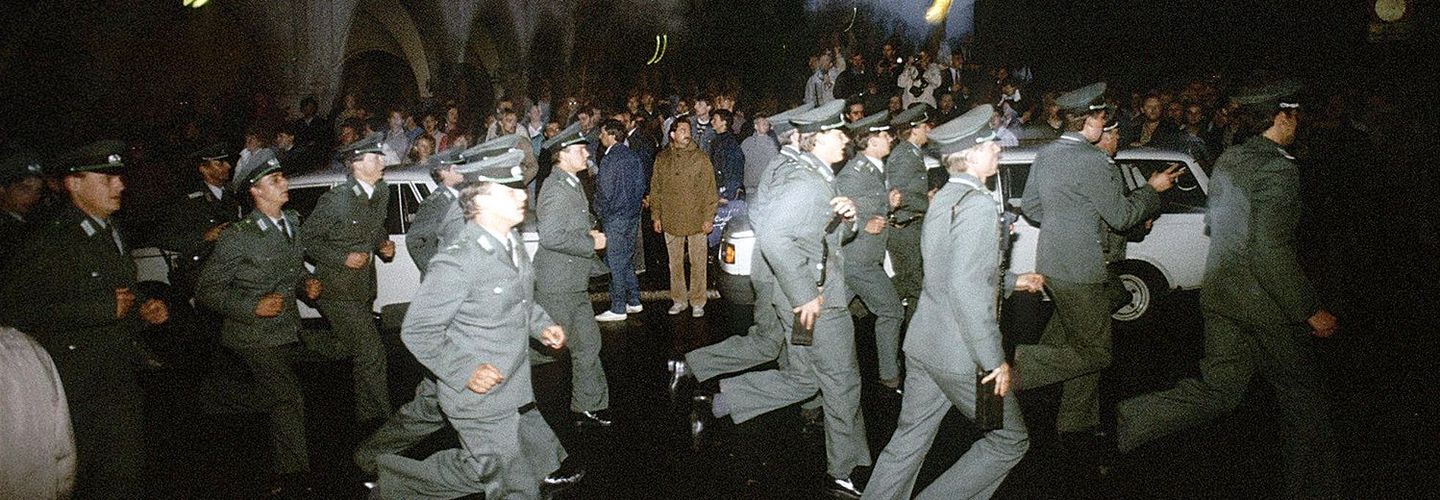
Hello, I'd like to upload this image from the w:German Federal Archives (found it here). Am I allowed to upload it? I see the picture below is already uploaded and it should be from the same source.
No. A 1989 photograph is still copyrighted, and there is no free license at the source page. The file we already have was released under a free license by the archive, but that does not automatically apply to all photos from that archive. --Rosenzweigτ06:01, 11 December 2025 (UTC)Reply
Latest comment: 1 day ago22 comments7 people in discussion
The political parties in my region have sent political leaflets to my house explaining why to vote for them. Am I allowed to upload them to Wikimedia Commons or not? Any responses would be much appreciated! 11 Downing Street (talk) 17:08, 11 December 2025 (UTC)Reply
Probably not. Works which are less than 70 years old (assuming you're in the UK) are usually copyrighted (which does not mean works older than that are always free). Leaflets which contain very simple texts and images might be ok. It depends on if they're above the threshold of originality or not. --Rosenzweigτ17:33, 11 December 2025 (UTC)Reply
Firstly, thank you for responding.
One of the leaflets is just a slogan simply talking about backing free parking. Would that be allowed in the UK? There are no images, it's just a blue background. 11 Downing Street (talk) 17:41, 11 December 2025 (UTC)Reply
Try another site? I don't use any, so cannot make recommendations. An online search for "free online image sharing site" should bring up suitable ones. --Rosenzweigτ18:49, 11 December 2025 (UTC)Reply
The text is likely not creative enough for a copyright, the Conservative Party logo is copyrighted though (it's definitely above UK ToO). Abzeronow (talk) 23:31, 11 December 2025 (UTC)Reply
For what it's worth: you've started your activity on Commons dealing with one of the more difficult cases that arises. If you plan on continuing to upload third-party materials, you should probably read COM:THIRD. - Jmabel ! talk20:29, 12 December 2025 (UTC)Reply
Yes, if that photograph was made by a State Dept employee of the embassy in Kyiv, then the license on Flickr is inaccurate and the State Dept-PD licensing tag is correct. Many federal US government employees are not fully aware of the way copyright applies to their work or their office/department's work and incorrectly assume the work is not automatically PD. Note that they apply the incorrect licensing tag to all of their photographs, so it is probably just a mistake/oversight in their account settings. 19h00s (talk) 13:48, 12 December 2025 (UTC)Reply
Thank you for the clarification. Should I remove the comment made by FlickreviewR 2 saying the license didn't match or should I wait for an administrator to look at it? RandomUserGuy1738 (talk) 14:42, 12 December 2025 (UTC)Reply
I'd add a note to the talk page specifying why it shouldn't be deleted/why the Flickr license is wrong, and then let an admin remove the tag. Or if any admins see this conversation, they can jump in and help. 19h00s (talk) 15:38, 12 December 2025 (UTC)Reply
Good catch. Thanks Nard. I hedged my bets with my comment “if that photograph was…” but I should’ve just done a reverse image search. --19h00s (talk) 12:48, 13 December 2025 (UTC)Reply
Latest comment: 3 days ago2 comments2 people in discussion
This image: [11], it's a satellite image of a blizzard in Durango, Chihuahua, Sonora, Arizona and New Mexico.
Under which license should I publish the photo? ಠಠ02:00, 13 December 2025 (UTC)Reply
Latest comment: 1 day ago10 comments5 people in discussion
File:Freyberg VC Rupert Brooke 1915.jpg The photo was taken in Lemnos in 1915, which at the time was part of the Ottoman Empire and today is in Greece. I'm not sure whether the copyright status in Turkey or Greece is relevant here and I'm also not familiar enough to know when (or if) the work became PD in either country (PD-Greece doesn't exist). I see no evidence of historical publication.
I mean, no, not really. The rule on Wikimedia Commons that a file should be free in its "country of origin" as well as the United States is a community rule, not a law, and so there is no actual jurisprudence which will tell you specifically what that means. In general, the "country of origin" of a work, under the Berne Convention, is the country where it was first published (not necessarily where it was created), but it is worth mentioning that a work can be published simultaneously in multiple countries. However, it is also worth mentioning that the copyright holder of this item would have been the British government, and the British government, per PD-UKGov, disclaims worldwide rights on any materials on which its crown copyright has expired, which would apply here (irrespective of country of origin). D. Benjamin Miller (talk) 19:51, 13 December 2025 (UTC)Reply
@Traumnovelle If {{PD-UKGov}} applies, it doesn't matter what the copyright situation is in the US. PD-UKGov is a statement from the copyright owner that they won't enforce any residual copyrights they possess anywhere in the world. If the item retains a copyright in the US, only the copyright owner can enforce it and we have this statement from the owner saying they won't enforce it. From Hill To Shore (talk) 20:53, 14 December 2025 (UTC)Reply
Latest comment: 1 day ago5 comments5 people in discussion
At https://archive.org/details/introduction-to-programming-using-fortran/, there is a book I'm interested in uploading, but the license statement is very confusing... it appears on the second page, and states in detail the CC BY-SA 3.0 license, including a link to it... but the image attached above it is of the CC BY-NC-SA license. Of course, if the latter is the actual license, then uploading it will not be possible, but I'm not sure which license statement here is the most authoritative one considering they are right next to each other and blatantly contradictory. What should I do in this case to figure out how the work is licensed? Is it free or not? — rae5e <talk> 16:31, 13 December 2025 (UTC)Reply
Normally, ask the author, but is he the Ed Jorgensen who died three months ago? That's a strange mistake to make in a book. This webpage offers the 2020 version under the NC license, but the same mistake is inside the book. His two other books are clearly under the NC license. So, the intention was probably NC. -- Asclepias (talk) 16:53, 13 December 2025 (UTC)Reply
Irrespective of the private intention of the author, though, a release under a given license is a release under that license. Nothing prevents an author, of course, from releasing the same content with multiple licenses (such as CC BY-NC-SA 3.0 and CC BY-SA 3.0). D. Benjamin Miller (talk) 19:45, 13 December 2025 (UTC)Reply
Doesnt that make the BY-NC-SA 3.0 useless and unenforcable? After all every reuser can simply claim that they obeyed the CC BY-SA 3.0 instead Trade (talk) 04:05, 14 December 2025 (UTC)Reply
Latest comment: 2 days ago1 comment1 person in discussion
As some of you may know, the US has peculiar copyright laws relating to sound recordings. Before 1972, sound recordings were not subject to federal copyright law, and it was only in 2018 that federal law preempted state law on pre-1972 sound recordings, with very long terms (see PD-US-record).
On the other hand, as noted on PD-US-record, not all audio files are "sound recordings." In particular, audio that comes from a motion picture is part of that motion picture and subject to the usual rules for audiovisual works. So, for example, the sound of a film that was published in 1929 is in the public domain in the US (even if a phonograph record published the same year isn't), and the sound of a film that is in the public domain for some other reason (such as non-renewal) is also in the public domain in the US.
To make it clear that an audio file was extracted from a public-domain movie or similar, I've created a new template, {{PD-US-extracted-audio}}, and a corresponding Category:PD US extracted audio. The template still needs to be used in combination with another explaining why the movie it was extracted from is in the public domain, but it should help prevent any confusion with sound recordings subject to the Music Modernization Act. D. Benjamin Miller (talk) 18:12, 13 December 2025 (UTC)Reply
The first is whether a state government can hold a copyright in a "public record." It is no coincidence that the relevant cases for this issue are from Florida and California, because both these states have laws which prohibit government entities on the state level from claiming a copyright on a public record. Other states do not have such broad laws.
The second matter is the question of originality. The public records laws in Florida and California disclaim copyright that would belong to the state (or an agency of the state, or a municipality of that state) in works with subject matter which is eligible for copyright. If the item in question is not a copyrightable work (because it does not pass the modicum of creativity test), then this disclaimer of copyright never enters the picture. D. Benjamin Miller (talk) 19:43, 13 December 2025 (UTC)Reply
Yes, it is, but the cases cited that relate to public records not being copyrightable are from Florida and California, not New York. There is no question that state government works (not edicts of government) are copyrightable in New York, and the state does claim copyrights. Even if a public record is copyrighted, however, this doesn't mean it necessarily can't be shared (indeed, there's the mention of fair use), and, indeed, there are good arguments for it being legal to share it for various purposes, even if it is subject to copyright. D. Benjamin Miller (talk) 20:01, 13 December 2025 (UTC)Reply
I just took a brief look at this YouTube channel, their content is not mainly about police bodycam, but they have certainly showcased police bodycam footage in some of their videos. Thanks. Tvpuppy (talk) 04:50, 14 December 2025 (UTC)Reply
Latest comment: 1 day ago4 comments3 people in discussion
I am in a curious situation. I asked a very kind older gentleman to make his photo of Poecilia latipunctata available to Wikimedia Commons. P. latipunctata is an endangered fish and this is likely our only opportunity to get a good quality photo (the other alternative being this).
He said he would share it. He did not understand how to upload it to his Facebook profile with the copyright information in the caption. I tried to explain how to upload it to his FlickR account with the correct license, but this proved too technical as well.
In the end he uploaded it like this and said "take it or leave it"... There is a "All rights reserved" tag, which he did not understand how to change, and a CC-BY-SA license notice in the photo itself. Can we make this work? Surtsicna (talk) 11:43, 14 December 2025 (UTC)Reply
Thank you, @Pigsonthewing and @Howardcorn33. I have an original sent to me by the author via Facebook Messenger. It is probably of a lower quality because of compression. The plan was to simply crop out the watermark once the license is reviewed. Surtsicna (talk) 18:12, 14 December 2025 (UTC)Reply
Latest comment: 1 day ago2 comments2 people in discussion
Works of employees of the US Congress are in the public domain. What about works of members of Congress? In particular, there are two letters concerning the Nanda Devi affair (the first two pages of this bundle, but not the remainder) which are of great historical significance. I'd like to upload them to Commons, but of course not if they're unfree. Marnanel (talk) 17:27, 14 December 2025 (UTC)Reply
If those works are created in their capacity as a member of Congress, then they are in the public domain, which sounds like the case here. On the other hand (for example) Senator Birch Bayh's many published books written while he was in office had/have no different copyright status than if he had been a private citizen. (There used to be a joke that Bayh had written more books than most Senators had read.) - Jmabel ! talk00:29, 15 December 2025 (UTC)Reply
Latest comment: 7 hours ago2 comments2 people in discussion
During my time on Wikipedia, I noticed that almost all pages of Google websites (such as w:YouTube Shorts) have screenshots from Commons with the website's interface tagged PD due to threshold of originality. Most other pages, like w:TikTok, w:Reddit and w:Pixiv use screenshots with similarly simplistic interfaces, but are tagged as fair use. Most of these do feature non-free content prominently, but it would be relatively easy to find freely licensed content (search via filters or upload own work) and upload the screenshot to Commons with the content tagged under a free license and interface tagged as PD-simple.
So why are Google websites pretty much the only ones that have free screenshots? Was there a definitive proof that Google's interfaces are below TOO (like what happened with the Cyberpunk 2077 logo)? Should I try to make and upload screenshots of the other websites with free content tagged under a free license and interfaces tagged as PD-simple or should the Google screenshots be discussed in a DR? Dabmasterars [EN/RU] (talk/uploads) 08:31, 15 December 2025 (UTC)Reply
Latest comment: 1 hour ago3 comments2 people in discussion
I have a photo that is clearly under the purview of Template:PD-Brazil-Photo: it is a very simplistic passport photo taken in 1954, of a deceased person, available in an online database. This would make it public domain in Brazil, its country of origin. However, despite the template's suggestions, I am uncertain about how this would intersect with American law, as does a passport photo really count as "published"? PARAKANYAA (talk) 21:20, 15 December 2025 (UTC)Reply
Under US court precedent, a passport photo from 1954 would be considered published because the photograph has left the custody of the photographer, pre-1978 had a very murky definition of publication, for works published in 1978 and afterwards, it is a lot more clear-cut. Abzeronow (talk) 01:15, 16 December 2025 (UTC)Reply


.svg/20px-Pictogram_voting_comment_(orange).svg.png) Comment It is indeed surprising that these videos are under a free license. They should be contacted to make sure the license is valid, on YT or on https://www.facebook.com/CartoonNetwork.India/. Another possibility is to write to copyright@youtube.com (I did that). But if we don't get any answer, I don't see any reason to delete these files from Commons. There is no doubt that this is an official channel, so we do not have to make a double standard with free licenses. Yann (talk) 15:31, 4 December 2025 (UTC)
Comment It is indeed surprising that these videos are under a free license. They should be contacted to make sure the license is valid, on YT or on https://www.facebook.com/CartoonNetwork.India/. Another possibility is to write to copyright@youtube.com (I did that). But if we don't get any answer, I don't see any reason to delete these files from Commons. There is no doubt that this is an official channel, so we do not have to make a double standard with free licenses. Yann (talk) 15:31, 4 December 2025 (UTC)
![[1]](https://commons.wikimedia.org/wiki/File:Looney_Tunes_YouTube_Copyright_Claim.png)


_Island.png)
_Island.png)
_Islands.png&action=edit&redlink=1)
_Islands.svg&action=edit&redlink=1)
_Islands.svg)
_Islands.svg)
 Info The relevant ToO is Australia, which is low. Abzeronow (talk) 04:17, 9 December 2025 (UTC)




.jpg)
![[11]](https://assets.science.nasa.gov/content/dam/science/esd/eo/images/imagerecords/17000/17930/azsnow_tmo_2007023_lrg.jpg)


.jpeg)


